

You’ve probably got a busy week filled with work, errands, and family activities. Fitting health appointments into a packed calendar feels difficult when you don’t know the time commitment. But figuring out your schedule doesn’t have to be a headache.
A typical comprehensive eye exam takes between 30 and 60 minutes. Knowing this timeframe helps you plan your day with ease. You can schedule your visit during a lunch break without feeling rushed. Your optometrist works efficiently to provide personalized attention and keep your day moving smoothly.
The Average Time for Your Eye Appointment
Adults and seniors generally spend 30 to 60 minutes at the clinic. This window gives the optometrist plenty of time to thoroughly evaluate your visual health. Complex vision needs naturally require a few extra minutes for specific tests and consultations.
A first-time visit also takes longer because of the initial paperwork and establishing your medical history. Arrive 10 to 15 minutes early to complete these forms and stay on track. Getting this administrative work out of the way means your actual appointment focuses entirely on your eyes.
Are Visits Shorter for Children?
Child visits typically wrap up in 15 to 30 minutes. Young attention spans are notoriously short. So, the clinic team works quickly to keep children comfortable during their assessment.
A familiar and friendly environment helps kids relax and cooperate with the optometrist. Pediatric equipment often features fun colours and engaging lights to make the process feel like a game. This approachable method builds a foundation for positive healthcare experiences in the future.
Signs You Might Need a Longer Assessment
Some visual symptoms require a more detailed investigation. Your optometrist needs extra time to find the root of your discomfort and get you back on track. Expect a slightly longer visit if you experience any of these common signs:
- Blurry vision that worsens throughout the day
- Chronically dry or irritated eyes
- Frequent headaches
- Sudden flashes of light or new floaters
Complex Medical History and Extra Tests
Health conditions like diabetes add to the checkup time. The optometrist needs to inspect your retina carefully to monitor for potential diabetic eye disease. High blood pressure also warrants a closer look at the delicate blood vessels in the back of your eye.
A dilated eye exam also adds extra time since the drops take up to 30 minutes to work fully. Plus, your eyes remain sensitive to light after this procedure. Plan a safe ride home and bring a good pair of sunglasses to reduce glare.
What Happens at Your Eye Assessment
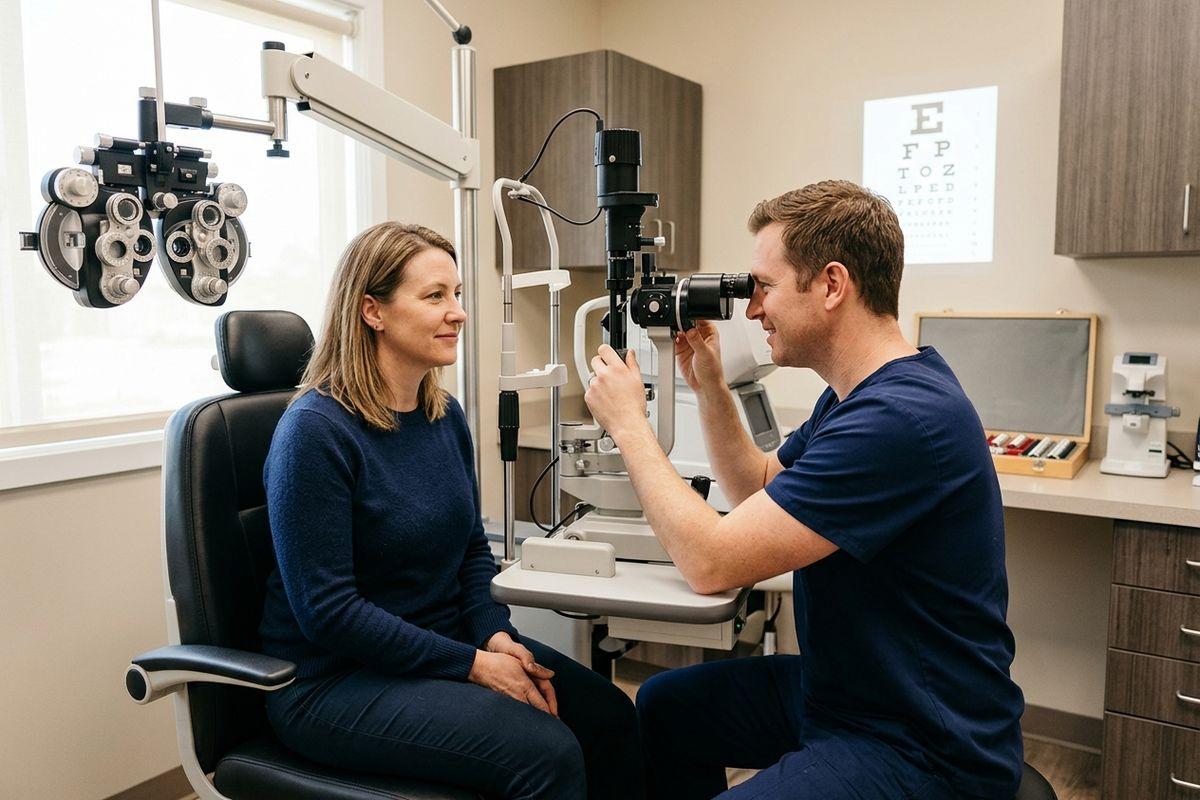
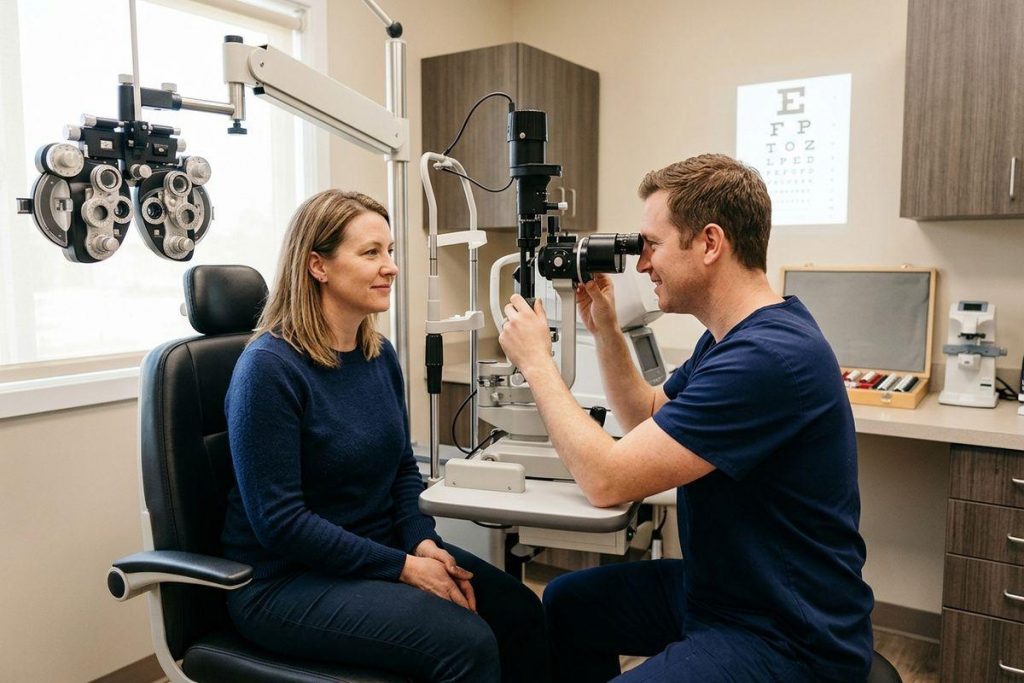
The assessment often starts with a review of your visual sharpness. Your optometrist checks visual acuity using a letter chart to establish a baseline. Then, refraction tests help us find your glasses prescription by placing different lenses in front of your eyes and asking which option looks clearer.
After the vision check, your visit includes a careful look at the eye’s internal structures. The team checks your eyes for signs of disease like glaucoma or cataracts. We can even view the layers of your retina in detail using high-resolution imaging.

What to Avoid Before Your Exam
Tired eyes can affect the accuracy of your vision tests. You can rest your eyes and avoid heavy screen time before your visit. Take frequent breaks if you work on a computer all day. Staring at digital devices reduces your blink rate and dries out your eyes. Fresh, rested eyes help your optometrist determine your accurate prescription, so get a good night of sleep before your appointment.
Your optometrist needs to know what correction you currently use, so bring your current eyewear to the clinic for us to measure the lenses. Also, leave your contact lenses out before the test. Wearing contact lenses temporarily alters the shape of your cornea. Remove them a few hours early to allow your eyes to return to their natural state.
Guidelines for Your Family Care Schedule
How often you should get an eye exam depends on your age. Here is a general schedule to follow:
Adult and Senior Vision Changes
Regular visits keep your vision sharp as you age. Adults shouldn’t wait longer than 2 years between assessments. Vision changes happen slowly over time, often without you even noticing the subtle differences.
Seniors need an annual eye checkup to monitor for age-related conditions. Conditions like macular degeneration develop gradually in later years. Early detection helps preserve your sight for the future.
Children and Infant Milestones
Healthy vision helps children learn and grow successfully. Infants get their first check at 6 months of age. At this stage, the optometrist looks for proper eye alignment and healthy focusing abilities.
School-aged children need an exam every year to help them see the board clearly and excel in their studies. Kids rarely complain about poor vision because they assume everyone sees the world the same way. Proactive exams can uncover hidden issues before they impact learning.
Eye Exams Are Time Well-Spent
Make eye care a regular part of your wellness routine. Regular exams catch potential issues early and keep your prescription where it should be. Your eyes work hard for you every single day, so they deserve dedicated attention.
Our caring team at Henderson Vision Centre can help your entire family maintain bright and healthy eyes. Schedule your next visit today and support your long-term visual health.