

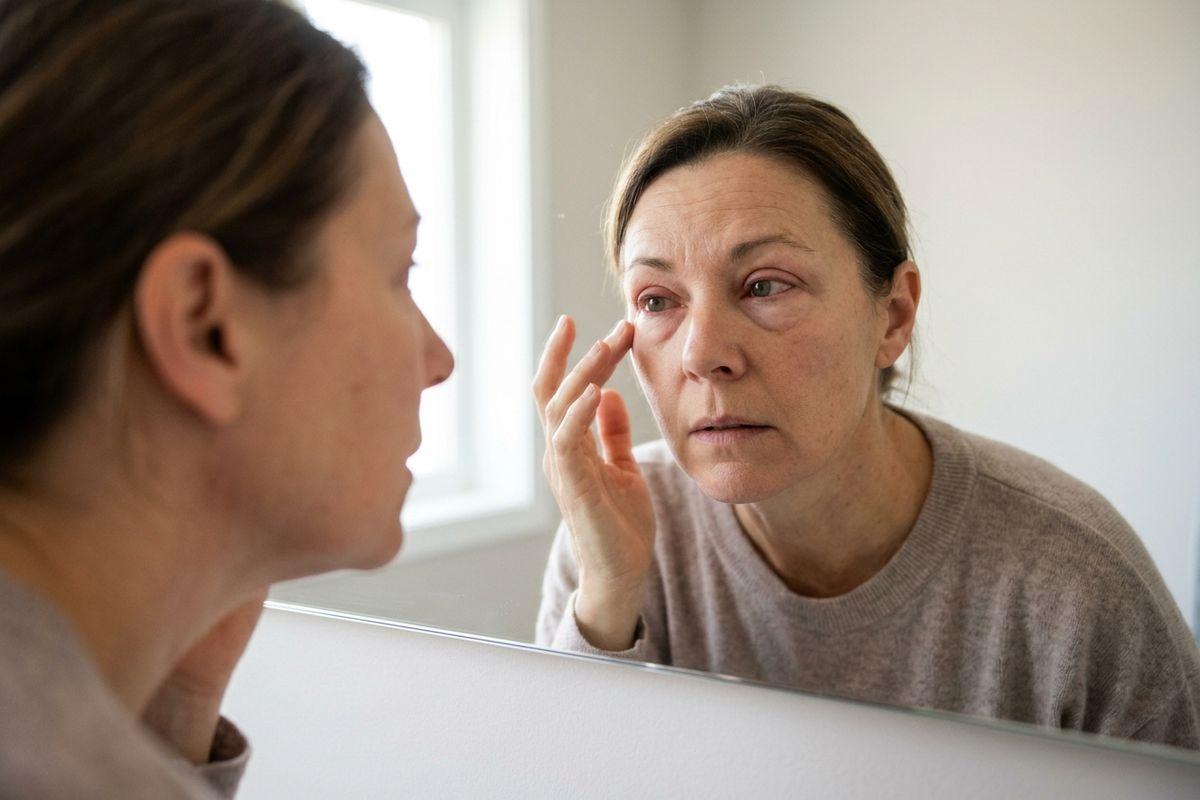
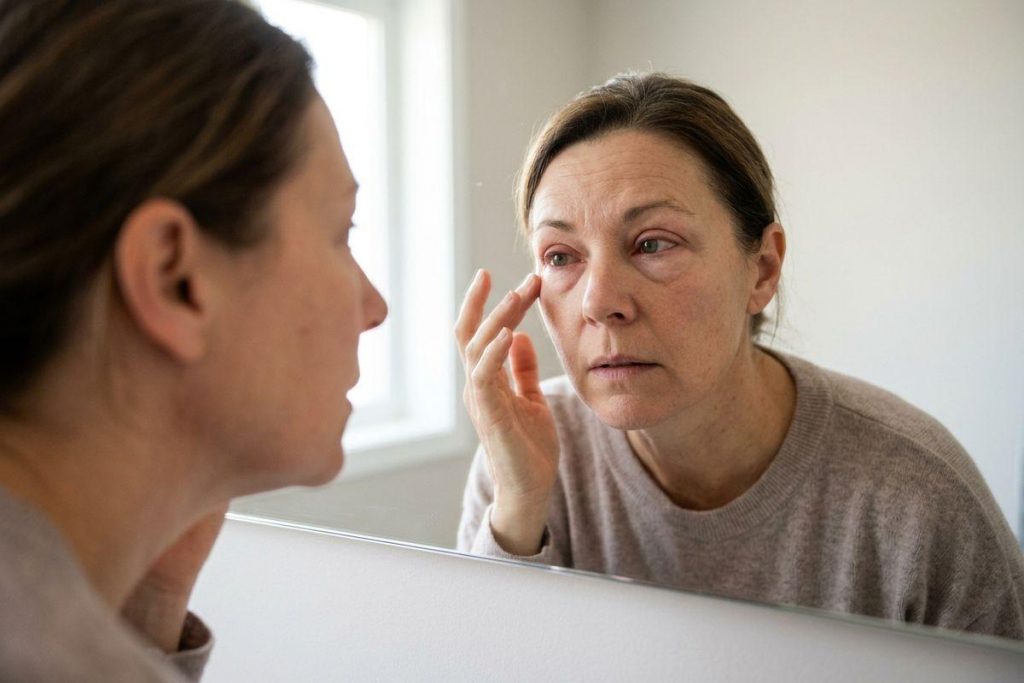
Allergy season often shows up in your eyes first. Lids feel heavy, everything itches, and the tearing blurs whatever you’re trying to look at. Pollen drives it in spring and again in late summer, while dust and pet dander can keep eye allergies going all year.
To relieve swollen eyes from allergies, rest a cool compress on your closed lids for 10 to 15 minutes, rinse with preservative-free artificial tears, keep your hands away from your eyes, and keep your distance from the allergen. Swelling that lingers after the itch settles can point to something other than allergies.
What Swollen Eyes Look and Feel Like
Allergy swelling usually affects both eyes at once, and it rarely travels alone. Watch for a few of these during peak season:
- Puffy, heavy eyelids
- Redness across the white of the eye
- Itching that returns the moment you stop rubbing
- Thin, watery discharge
- Sensitivity to bright light
Dark circles can show up too, thanks to congestion in the small vessels under your eyes. Thick or coloured discharge points elsewhere, since allergy tears should remain clear.
Fast Relief for Puffy Eyes at Home
Cold Compress
Soak a clean cloth in cool water, wring it out, and rest it over your closed eyes for 10 to 15 minutes. Repeat 3 or 4 times throughout the day, and use a fresh cloth each time to keep allergens from moving back onto your skin.
Artificial Tears
Preservative-free artificial tears help dilute the histamine sitting in your tear film and wash pollen off the surface, which can bring the itch down a level. Keep the bottle in the fridge, and you can also enjoy a cooling sensation.
Habits That Make Swollen Eyes Worse
Rubbing might feel good for a couple of seconds, but it’s a habit worth breaking. Pressure on the lids releases more histamine and adds swelling on top of what the allergy already caused, so the puffiness may come back worse.
Redness-relief drops deserve limits too, because frequent use can leave your eyes redder once you stop. If burning continues after the swelling settles, a dry eye assessment can tell you whether something else is affecting your tear film.
Common Allergens Behind Swollen Eyes
Common triggers fall into outdoor and indoor allergens.
Outdoor Allergens
Pollen from trees, grasses, and weeds travels farther on the wind than most people expect, and it lands on lids and lashes as easily as it lands on a car hood. Wraparound frames from the sunglasses showroom block a good share of it, and lenses that filter both UVA and UVB do more work on bright days.
Indoor Allergens
Plenty of swollen eyes have nothing to do with pollen. Dust mites, pet dander, and mould live year-round indoors, and symptoms can pick up over winter once the windows stay shut and the furnace keeps moving the same air around. Wash bedding weekly in hot water, run a dehumidifier in damp rooms, and keep the bedroom pet-free so you get 7 or 8 hours away from dander every night.
Tips to Avoid Allergens
Small changes to your routine can cut how much allergen reaches your eyes:
- Close the windows on windy days and run the air conditioning instead
- Rinse your face and hands when you come in from outside
- Change out of yard clothes before you settle on the couch
- Wear glasses instead of contacts during heavy pollen stretches, since lenses hold allergens against the eye

How Long Swollen Eyes From Allergies Last
Comfort often returns fairly quickly once you’re away from whatever set your eyes off. Step inside, rinse your eyes, cool them down, and the puffiness should settle within hours.
Left alone, flare-ups can stretch through an entire peak season. Itching and swelling that never quite go away usually point to indoor triggers, and dry eyes can blur your vision alongside them, making the two harder to tell apart.
When to See an Optometrist About Swollen Eyes
Cool cloths and drops can help with many allergy flares. Book an exam if you notice any of the following:
- Swelling that lasts more than a few days or interrupts work, school, or driving
- Blurry vision that doesn’t clear when you blink
- Thick or coloured discharge
- Contact lenses that feel gritty or won’t stay comfortable
Sharp pain and sudden vision changes sit in a different category, so know when eye pain is an emergency before you decide to wait it out.
What Happens at Your Eye Exam
At the visit, we look at your lids and the surface of your eyes under magnification, check how your tears are behaving, and ask about timing and triggers. A comprehensive eye exam can also rule out infection or dry eye, both of which mimic allergies from the outside.
From there, you leave with a plan built around your allergens and the season ahead.
Get Ahead of Your Next Allergy Flare
Swollen, itchy eyes don’t have to set the terms for your summer. Cool the lids, stay ahead of your triggers, and an exam can fill in whatever home care leaves behind.
We take time to understand your symptoms and your daily routine before recommending anything. Book an appointment with Henderson Vision Centre today, and find comfort that can carry you past this week.