

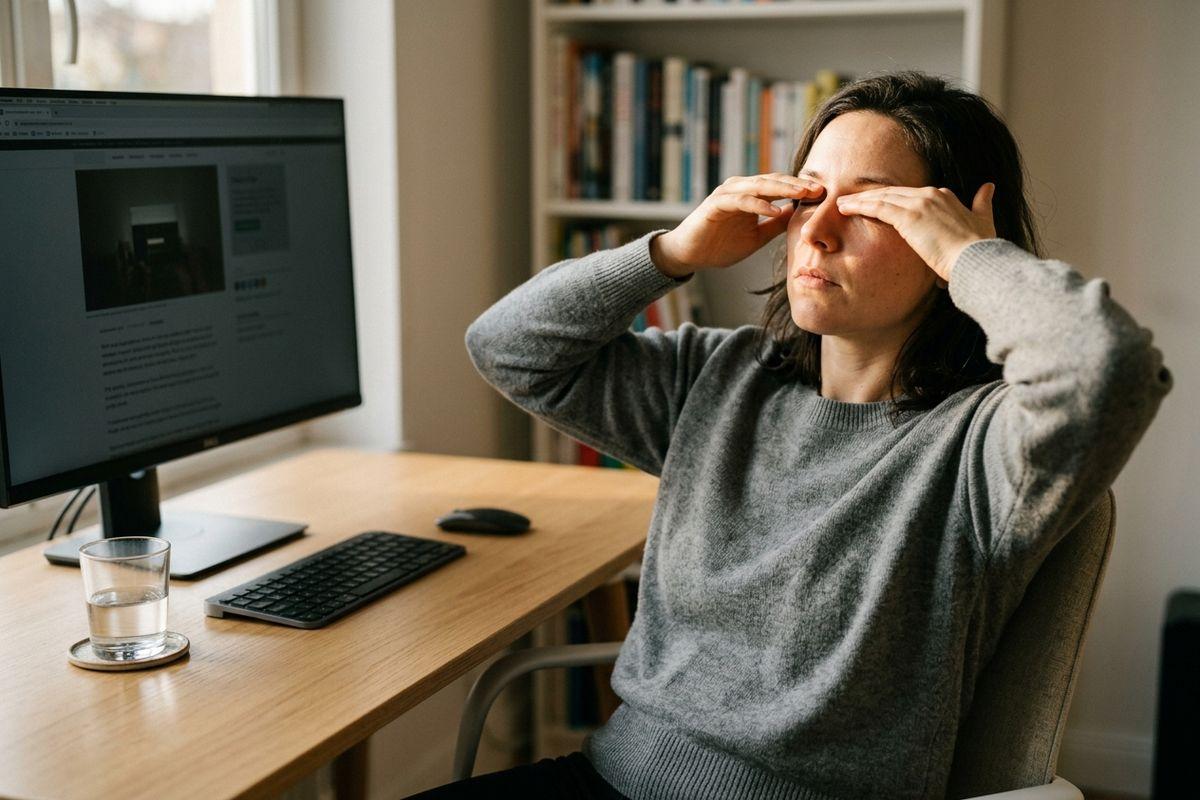
We hear about burning eyes from patients all the time. For some, it’s a mild sting that fades after a few minutes. For others, it lingers through the day and makes it hard to focus on anything else.
In most cases, burning eyes come from a dry or irritated eye surface, though inflamed eyelids can also be behind it. Home care can help with mild symptoms. If the burning keeps coming back, book a visit with your optometrist so we can take a closer look and check for signs of dry eye.
What Burning Eyes Feel Like
Burning doesn’t feel the same for everyone. Some people describe a sharp sting. Others say it feels like a grain of sand is stuck under the eyelid. Your eyes might also water constantly even though they feel dry, which surprises a lot of people. You may notice a few of these along with the burning:
- A gritty or sandy feeling
- Redness
- Watery eyes
- Discomfort that comes and goes or sticks around all day
Common Causes of Burning Eyes
Plenty of everyday things can leave your eyes stinging. Here are the causes we see regularly.
Dry Eye and Screen Time
Dry eye happens when your tears can’t keep the surface of your eye moist, either because you don’t make enough or because they evaporate too quickly.
You blink less when you’re focused on a screen, whether you’re answering emails or gaming. Some people blink only 3 to 7 times a minute when using a screen. With fewer blinks, your tears dry up faster and leave the surface of your eye exposed.
Allergies and Irritants in the Air
Pollen and pet dander can irritate your eyes, especially if you live with seasonal allergies. Wildfire smoke in the summer and cold wind in the winter don’t help either.
Indoor air plays a part, too. Your furnace pulls moisture out of the air all winter long, and air from vents blowing on your face can make your tears evaporate faster.
Blepharitis and Irritated Eyelids
Sometimes the problem sits along your lash line rather than on the eye itself. Blepharitis is inflammation of the eyelids, and it can leave your lids red and sore with flakes on your lashes.
It can also keep the oil glands in your eyelids from working properly. Those oils help stop your tears from drying out, so blepharitis and dry eye often show up together.
Pink Eye
Pink eye, or conjunctivitis, is inflammation of the thin, clear tissue that covers the white of your eye. Along with burning, you might notice discharge or eyelids that feel glued shut when you wake up.
Some types spread easily, so keep your towels to yourself until your optometrist has had a look.
Contact Lenses
Contacts can dry out your eyes when you wear them longer than recommended. Your lens care routine matters as well, since some solutions don’t pair well with certain lens materials and expired solution can irritate your eyes. Stick with the solution your optometrist recommends and replace your lenses on schedule.
Why Burning Eyes Get Worse at Night
If your mornings feel fine and your evenings don’t, you’re not alone. Your eyes deal with wind, heat, dry air, and screen glare all day, and the effects add up by dinnertime. A few things can make evening burning worse:
- Hours of screen time without breaks
- Contact lenses that lose moisture as the day goes on
- Tired eyes
- Lower tear production during sleep
Adult in a navy polo applying eye drops from a small bottle, holding lower eyelid down and looking up, in a bathroom with a sink and mirror.
How to Soothe Burning Eyes at Home
Start with these steps when your eyes begin to sting:
- Use preservative-free artificial tears to add moisture back to the surface of your eye.
- Rest a warm or cool compress over your closed eyes for a few minutes. Warmth can help loosen the oils in your eyelid glands.
- Follow the 20-20-20 rule during screen work. Every 20 minutes, look at something 20 feet (6 metres) away for 20 seconds.
Simple Habits That Help
Your daily habits can also make a difference. Try adding these to your routine:
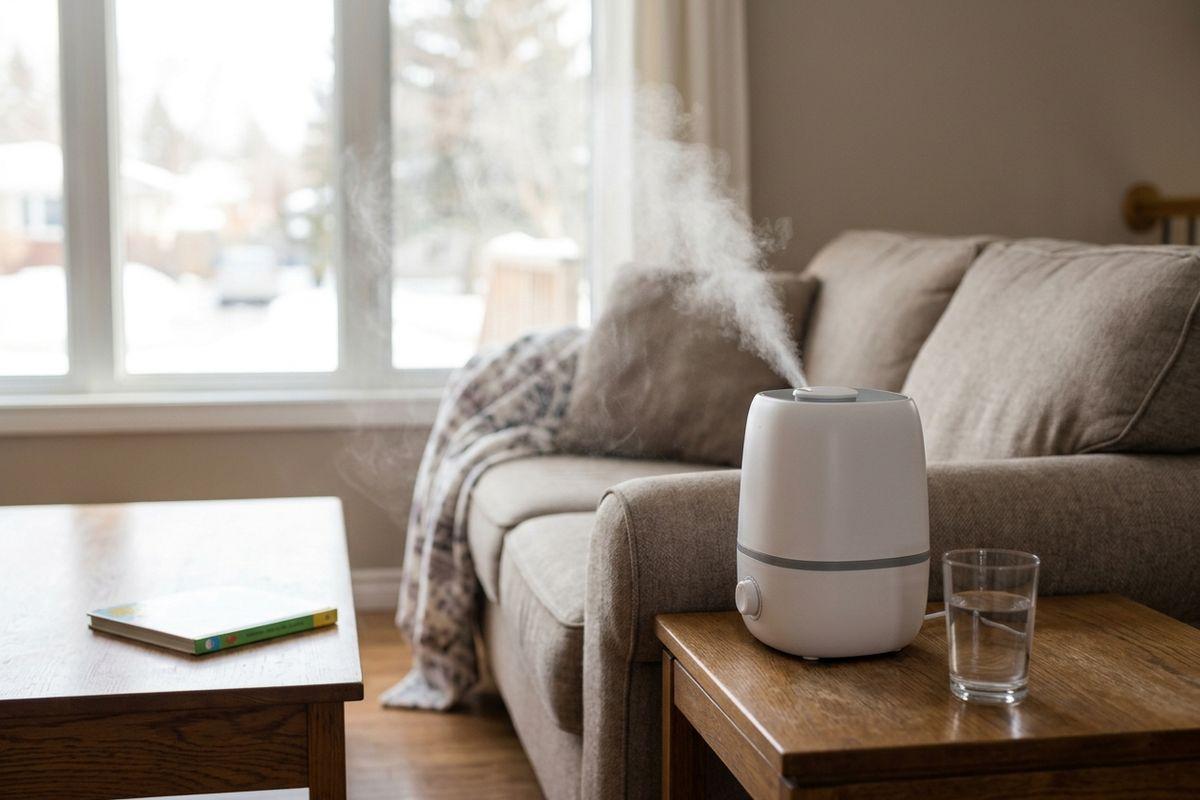
- Run a humidifier in rooms where the air feels dry
- Point car and desk vents away from your face
- Drink enough water throughout the day
- Wear sunglasses outdoors and goggles when you swim
- Wash your hands often and avoid rubbing your eyes
When to See an Optometrist for Burning Eyes
Home care can help with mild burning. Some symptoms need a professional opinion, though, and we’d rather see you sooner than later. Book an appointment if you notice any of the following:
- Burning that keeps coming back or gets worse
- Swollen eyelids
- Discharge
- Blurry vision
- Sensitivity to light
It’s also worth a visit if you’re using artificial tears several times a day just to stay comfortable.
Get Your Burning Eyes Checked
Burning eyes can wear you down, especially once they start affecting your work or sleep. The team at Henderson Vision Centre can look at what’s behind your symptoms and help you find a plan that fits your day. Book your eye exam and tell us what you’ve been feeling.