



Astigmatism is common, and for plenty of people it stays fairly steady for years. But if your glasses don’t seem as sharp as they used to, you might wonder whether your astigmatism has changed.
Astigmatism can get worse over time as the shape of your cornea changes with age, after an eye injury heals unevenly, or when a condition called keratoconus thins and reshapes the cornea. Regular eye exams can help you and your optometrist spot these changes early and update your prescription to match.
What Is Astigmatism?
Astigmatism is a refractive error, meaning your eye doesn’t bend light evenly as it focuses, and many people have at least a small amount. A typical eye is curved evenly, like a basketball. With astigmatism, the cornea at the front of your eye or the lens inside it curves more like a football.
Because of that oval curve, light lands unevenly on the retina at the back of your eye. You may notice blurriness at every distance. The menu board across the room and the phone in your hand can both look a little soft.
Signs Your Astigmatism Is Changing
Changes in astigmatism tend to happen slowly, and many people adjust to them without noticing. Watch for these signs:
- Blurry or distorted vision at any distance
- Eye strain after reading or using screens
- Headaches
- Squinting to see clearly
- More glare from headlights when you drive at night
What Can Make Astigmatism Worse
Several things can change the shape of your cornea, and some of them develop so gradually that you may only notice when your prescription changes.
Age-Related Changes
Your cornea doesn’t keep the same shape for your whole life. As people get older, both the amount and the direction of their astigmatism tend to change, mostly because of changes in the cornea. Prescriptions can change at any age. So the glasses you loved 5 years ago may not feel right today.
Eye Injuries
Scratches, chemical burns, and blunt trauma can all affect the cornea. When the eye heals in an irregular way, the corneal shape changes along with it, and astigmatism can increase.
See your optometrist after any eye injury, even if it doesn’t hurt much at first. Call us right away if the discomfort lasts or your vision starts to change.
Keratoconus
Keratoconus is a progressive condition that thins the cornea and makes it bulge outward into a cone shape. It usually starts in the late teen years, though it can begin later. As the cornea changes, astigmatism can increase along with it.
How Optometrists Check for Astigmatism
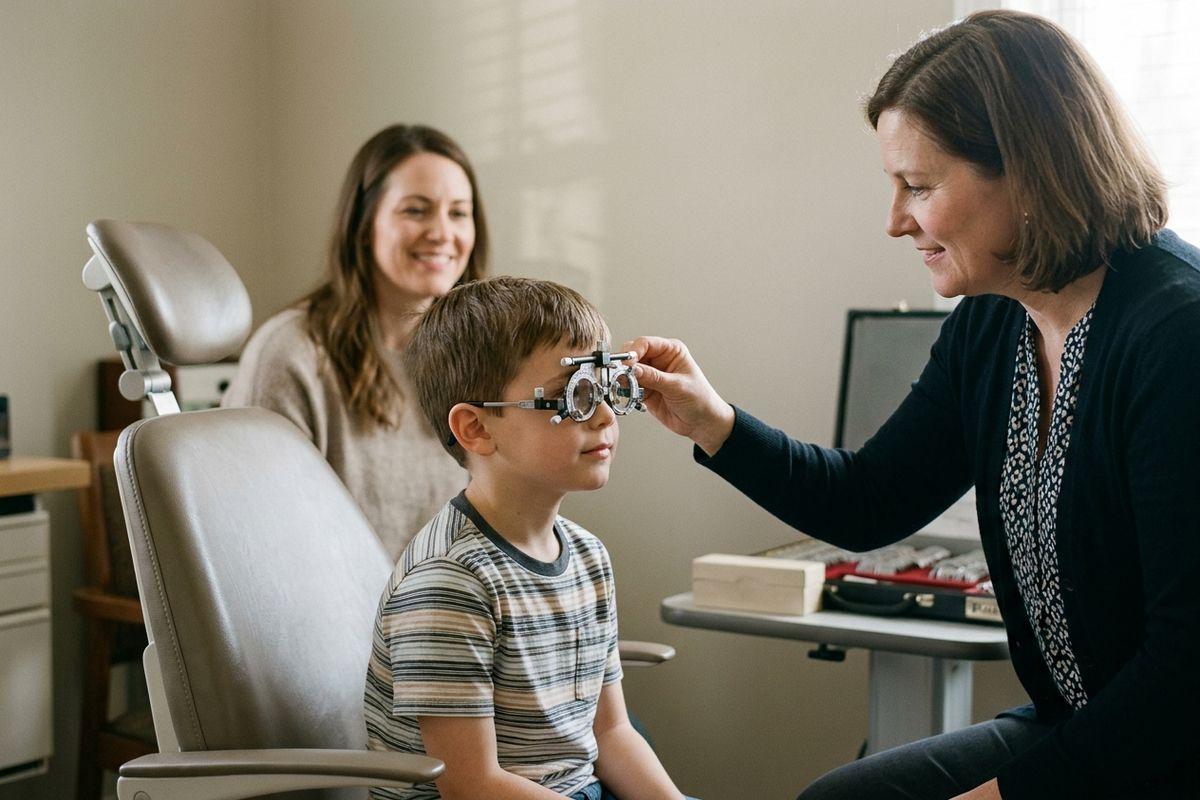
Finding astigmatism is straightforward, and the checks are quick and comfortable. An optometrist uses a few measurements together to build the full picture.
These are the common parts of an astigmatism assessment:
- An autorefractor, which estimates your prescription and the curve of your cornea
- A visual acuity chart, which shows how clearly you read letters at a set distance
- A refraction test, which compares lens options to find the correction that works for you
Astigmatism Treatment Options
Almost all astigmatism can be corrected. The right choice depends on your prescription and how you spend your day.
Glasses and Contact Lenses
Glasses use lenses that bend light to balance the uneven curve of your eye. They’re noninvasive, and you can update them whenever your prescription changes.
Toric soft lenses are made for astigmatism. They’re designed to stay in the right position on your eye, which can help keep your vision steady when you blink or move around. Ask about contact lenses if you’d like to play hockey or ride a bike without frames getting in the way.
Refractive Surgery
LASIK and PRK reshape the cornea to correct astigmatism. Not everyone is a good candidate. Your optometrist can review your eyes with you first and look at how stable your prescription has been, since a prescription that’s still changing can affect your options.
Why Regular Eye Exams Matter with Astigmatism
In children, uncorrected astigmatism can lead to amblyopia, often called lazy eye, because the brain may not learn to see clearly through the affected eye. Kids often don’t realize their vision is blurry.
For adults, uncorrected astigmatism can mean ongoing eye strain and headaches that follow you through the workday. Your optometrist can recommend how often to come in based on your age and eye health, and many adults over 65 need more frequent visits.
Tell your optometrist if astigmatism or keratoconus runs in your family. We can use that history to decide how closely to monitor your eyes.
Keep Up with Changes in Your Astigmatism
Astigmatism often changes slowly, and regular checkups can help you notice changes before they start affecting your day. Our optometrists measure your cornea and prescription at each visit, so we can track your astigmatism over time and adjust your glasses or contacts as needed.
At Henderson Vision Centre, we care for patients of every age, from a child’s first eye exam to fitting lenses for the way you work and play. Book an appointment and let us check how your vision has changed since your last visit.